Ultimate Guide to AI Agents and Digital Productivity in 2026: From Infrastructure to Implementation
The digital landscape of 2026 has witnessed a fundamental shift: AI agents are no longer experimental novelties; they have become essential business infrastructure
AI / PRODUCTIVITY
5/14/20263 min read
The Ultimate Guide to AI Agents and Digital Productivity in 2026: From Infrastructure to Implementation
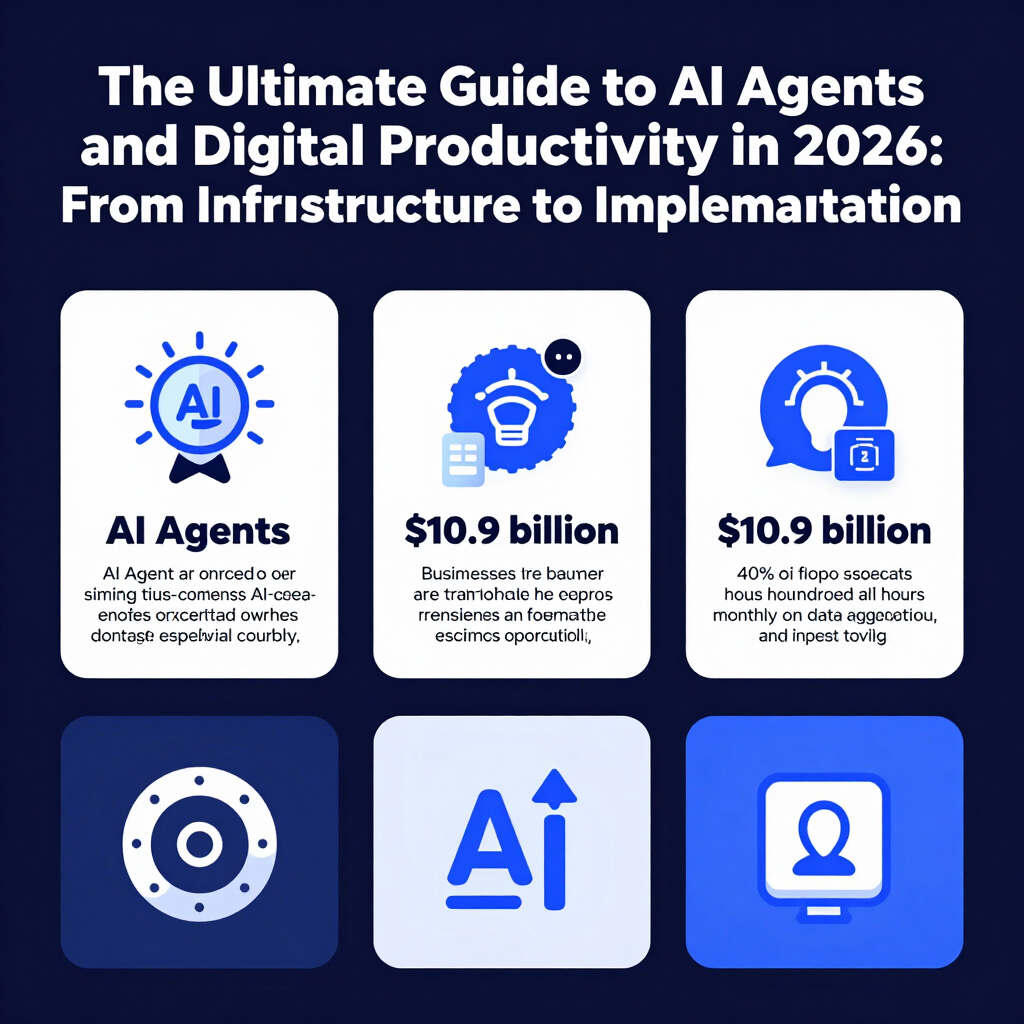
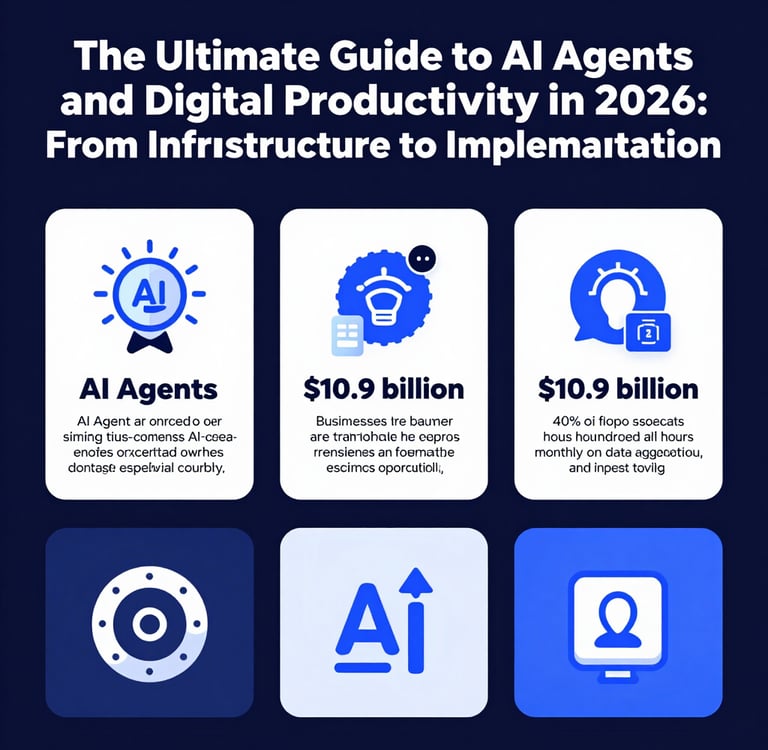
The digital landscape of 2026 has witnessed a fundamental shift: AI agents are no longer experimental novelties; they have become essential business infrastructure. According to industry reports, approximately 40% of enterprise applications now include task-specific AI agents, and the market has surged to $10.9 billion. Businesses are transitioning from simple AI-assisted prompts to AI-automated workflows, saving hundreds of hours monthly on data aggregation and repetitive tasks.
This blog post explores the leading agentic platforms of 2026 and provides a curated toolkit of digital resources to help you thrive in this autonomous era.
The Landscape of Autonomous AI Agents
In 2026, the choice of an AI agent depends entirely on your technical requirements and the specific environment in which you work.
For Non-Technical Teams and SMBs
For teams looking for immediate productivity without deep coding knowledge, several platforms lead the way:
Zapier Agents: Ideal for teams with existing SaaS stacks (Slack, HubSpot, Salesforce), offering a conversational layer to automate multi-step tasks.
Lindy: A powerhouse for conversational agents focused on email triage, lead qualification, and customer-facing workflows.
Make.com: Preferred by operations teams who require visual workflow control and the ability to audit automation logic through a scenario builder.
Manus AI: A versatile general-purpose agent that executes entire workflows—from travel planning to stock analysis—inside a controlled browser environment.
For Developers and Engineers
Technical teams are utilizing more robust, autonomous frameworks:
Devin AI: Branded as the world’s first autonomous software engineer, Devin can independently plan, code, and debug complex engineering tasks.
CrewAI: A Python-based framework for building role-based multi-agent systems, allowing specialized bots (researchers, analysts, writers) to collaborate on a single project.
n8n: A developer-first platform offering deep data control through self-hosted infrastructure and native LangChain integration.
Security, Trust, and Governance
As agents gain autonomy—with tools like Claude Cowork now capable of reading and acting on local files—security has become a top priority.
The industry is moving toward a Zero-Trust Security Architecture. A significant advancement in this area is the Agent Name Service (ANS), a DNS-inspired trust layer for Kubernetes. ANS provides cryptographic identity management and capability attestation, ensuring agents can prove their permissions without exposing sensitive implementation details. This is critical because a single compromised agent in a large ecosystem can trigger system-wide failures within minutes if proper authentication is missing.
Enhancing Knowledge and Research Pipelines
Knowledge management has been revolutionized by Source Grounding. Tools like NotebookLM, powered by Gemini 1.5 Pro, now utilize a 2-million-token context window to ingest entire document sets. This eliminates the "retrieval noise" common in traditional AI assistants and allows for comprehensive cross-document synthesis and thematic mapping.
Essential Toolkit for the 2026 Entrepreneur
While autonomous agents handle the heavy lifting of data processing and software engineering, human creators still need precision tools for design, finance, and branding. Here is a curated list of essential digital tools to complement your AI-driven workflow:
Branding and Content Tools
AI Image Prompt Helper: Refine your visual requests for high-quality AI generation.
The Naming Punch Generator: Create catchy, memorable names for your next startup or product.
Social Media Character Counter: Ensure your posts are perfectly formatted for every platform.
Pro Word Scrambler: A creative tool for brainstorming and wordplay.
Random Quote Generator: Instant inspiration for your marketing materials and social feeds.
Technical and Design Utilities
QR Code Generator: Quickly bridge the gap between physical and digital marketing.
Color Contrast Checker: Ensure your designs are accessible and meet professional standards.
Password Strength Meter: Maintain security in an increasingly autonomous digital world.
Typing Speed Test: Measure and improve your manual input efficiency.
Business and Financial Management
Startup Burn Rate Calculator: Essential for tracking your runway and financial health.
AI Profit and Savings Calculator: Measure the ROI of your AI implementations.
Business Financial Health Dashboard: A centralized view for monitoring your company's vital signs.
Domain Value Estimator: Get a quick appraisal for your digital real estate.
Domain Radio Test and Appraiser: Test how your domain sounds and its marketability.
The Future: Toward Multi-Modal Ecosystems
The next frontier for AI agents is multi-modality. We are moving toward a reality where you can upload video recordings, architectural diagrams, and technical reports into a single research notebook and ask the agent to cross-reference them in real-time. By combining the specialized grounding of research environments with the autonomous execution of agents like Manus or Devin, businesses can achieve 10x growth through custom AI innovations.
To stay competitive, the recommendation for 2026 is simple: pick one platform, pick one specific task to automate, and build incrementally from there.
Punch It Digital
Explore our sleek website template for seamless navigation.
Contact
Newsletter
hello@punchitdigital.com
+919769072111
© 2026 Punch It Digital. All rights reserved.